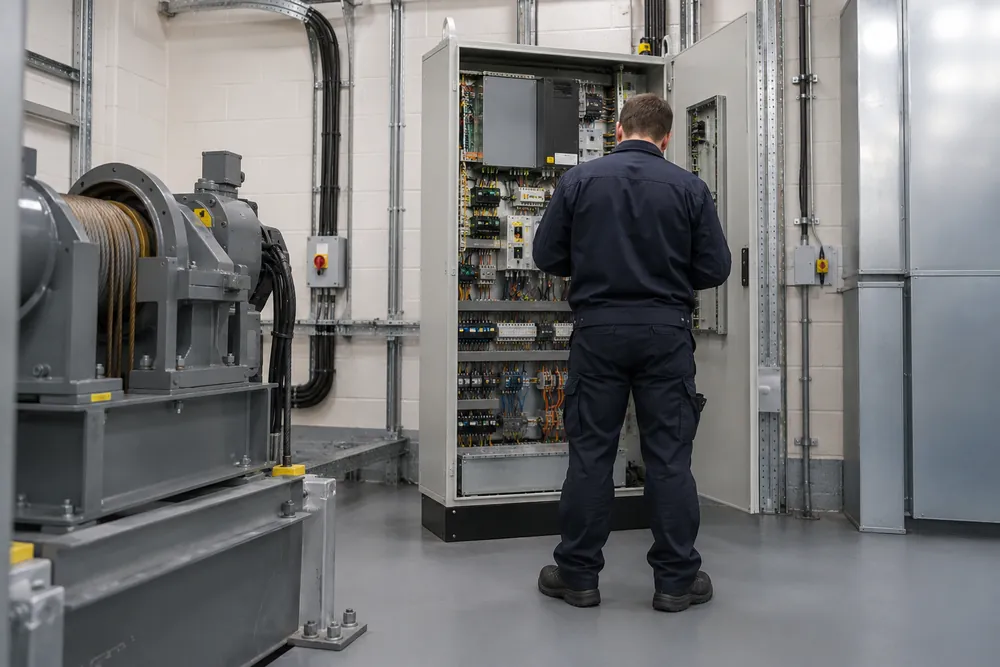
A Maintenance Plan Built Around Your Site
Lift maintenance in Manchester starts with understanding how your building works. An office lift handling arrival peaks needs a different service plan from a goods lift used throughout a warehouse shift. We help commercial building managers define the right scope, understand exclusions and keep a useful record of the work.
A maintenance visit should look beyond whether the lift runs on the day. The engineer considers changes in door operation, ride quality, landing accuracy and component condition. Repeated symptoms need recording so that the next visit can investigate the pattern rather than treating each fault as an isolated event.
What The Service Covers
The agreed schedule can include checks of landing and car doors, door tracks, safety edges, car lighting, communication equipment and controls. Access to machinery, the shaft and the pit is restricted to people with the right competence and safe working arrangements. The precise tasks follow the equipment documentation and the assessed risks.
For a hydraulic installation, oil condition, visible leakage and the behaviour of the power unit may need attention. A traction lift has different drive and suspension components. Give us the make, model and any previous service reports so the proposed plan can address the equipment actually installed.
Cleaning accessible door sills as part of normal building care can help prevent debris accumulating, but staff must not remove guards or reach into mechanisms. Agree which everyday checks your staff can perform and which belong to the lift engineer. Record unusual noise, door hesitation or stopping errors and report them promptly.
When To Review Your Contract
Review the plan when you take responsibility for a building, change its occupancy or experience repeat failures. A new tenant, longer opening hours or heavier deliveries may change how the lift is used. A contract inherited from a previous occupier may no longer fit that pattern.
Ask whether the proposal includes parts, labour, attendance outside normal hours and support for obsolete components. Confirm any exclusions for misuse, water damage or third-party interference. A clear schedule of responsibilities is more useful than a contract described only as a service package.
Maintenance And Examination Are Separate
The Provision and Use of Work Equipment Regulations 1998, known as PUWER, require work equipment to be maintained in an efficient state, efficient working order and good repair. A service visit does not replace a LOLER thorough examination. Keep those arrangements separately identifiable in the building's records.
Read the HSE maintenance guidance and our LOLER lift inspection guide when planning both activities. Where another organisation manages the examination, make reports available to the maintenance provider so remedial work can be scoped.
How Planned Servicing Works
- Share the lift inventory, available manuals, service history and your building's access arrangements.
- Agree a proposed task schedule, visit pattern and responsibilities before accepting the contract.
- Arrange access, isolation and any permit requirements with the person managing the premises.
- Carry out the agreed work and record findings, adjustments and any recommended repairs.
- Review recurring faults and plan component work around suitable shutdown windows.
Keep reports linked to a clear lift identifier, especially where several lifts share one building. A short description such as reception lift is useful alongside the manufacturer's number. Log outstanding recommendations separately so that a finding does not disappear inside a completed service report.
What Affects Maintenance Cost
The number and type of lifts, their condition, use and access arrangements all affect the quotation. Older components can involve sourcing work or a more restricted parts supply. The service scope also matters because a labour-only proposal and a plan including specified parts cover different risks.
Ask for the planned visits, exclusions and charges for additional attendance in writing. Explain whether the building can accept a daytime shutdown or needs work outside its operating hours. We use that information to help define a sensible enquiry, rather than publish a price that cannot reflect the site.
Preparing For The First Visit
Have the most recent examination report, maintenance log and details of open defects ready. Identify who can authorise access and approve further work. If keys or plant-room permissions are controlled by another party, arrange them before the appointment.
Tell us if your lift is the only accessible route between floors. The building manager should plan how occupants and visitors will use the premises while servicing takes place. For a known fault, use our lift repair service and explain whether the lift has been withdrawn from use.
Lift Maintenance FAQs
How Often Should A Commercial Lift Be Serviced?
Commercial lift servicing frequency should reflect the manufacturer’s recommendations, condition, usage and risk assessment. There is no single service interval that suits every commercial installation. Ask for a written schedule explaining the planned tasks and visits, then review it if building use changes or the lift develops recurring faults.
Can We Change Our Lift Maintenance Provider?
Changing your lift maintenance provider starts with checking the existing contract, notice terms and access to the equipment records. Gather the lift details, service reports and unresolved faults for the new provider. Confirm parts support and any specialist access requirements before agreeing the handover and the first planned visit.