Find The Cause Of The Fault
Lift repair in Manchester covers more than replacing the component that appears to have failed. Doors that reopen, intermittent stopping and erratic levelling can have several causes. We start with the symptoms, operating history and available reports to help scope the right investigation.
Tell us what happened before the fault, whether it affects particular floors and whether the problem changes with load or time of day. A facilities log is often more useful than a guess at the failed part. Do not repeatedly reset equipment to keep it running when a fault is unresolved.
When To Stop Using The Lift
If there is a suspected safety fault, prevent further use and follow your building's incident procedure. Keep people away from damaged doors and landing openings. Never attempt to open landing doors, enter the shaft or release a trapped passenger without the required training and authority.
This enquiry form is not an emergency rescue channel. Anyone inside a stopped lift should use the installed alarm or communication system and follow the building's emergency arrangements. The responsible person should contact the established emergency provider and emergency services when needed.
Typical Commercial Repair Requirements
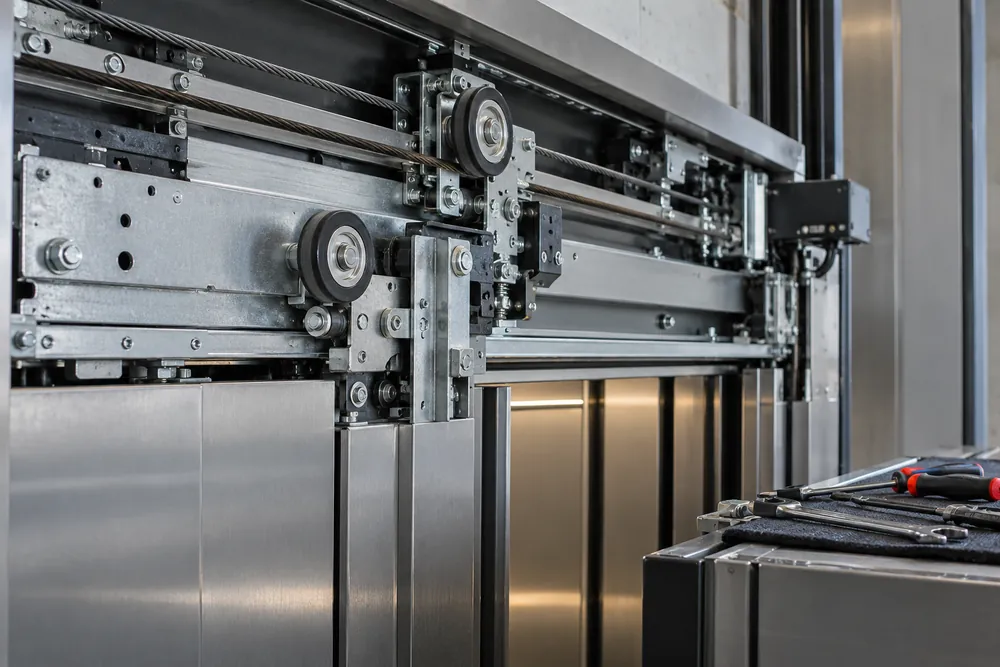
Door problems can involve worn rollers, obstructed tracks, damaged sills, closing equipment or detection devices. A repair needs to consider alignment and operation as a system. Replacing a visible part without checking the surrounding mechanism can leave the original cause unresolved.
Other enquiries concern control faults, drive equipment, communication systems or deterioration associated with water ingress. The diagnostic method depends on the installation and the information available. Photographs of the landing or identification plate can help, but only take them from a safe, publicly accessible position.
Where an insurer or examiner has identified a defect, share the exact wording rather than a shortened summary. A requirement to repair a door assembly is different from an advisory note about a future upgrade. The report helps define priorities and whether the equipment can remain in use.
Safe Repair And Return To Use
PUWER applies to the condition and maintenance of workplace lift equipment. Repair work must be planned with suitable isolation and controls for the hazards present. The HSE guidance on maintaining work equipment explains the need for competent maintenance and safe working arrangements.
A substantial failure or work on critical parts may require further examination before the lift returns to use. The competent person should determine what is required for the particular repair. See our LOLER examination page for how examination relates to maintenance and repair.
The Repair Process
- Record the symptoms, lift identity, current operating status and any immediate restrictions.
- Arrange safe site access and investigate the fault using the equipment information available.
- Explain the findings and propose repairs, including parts availability and exclusions.
- Obtain agreement for the work, then coordinate isolation and the shutdown with the building manager.
- Complete the repair and relevant checks, documenting the outcome and any remaining limitations.
Ask who will authorise changes if investigation reveals further damage. In a managed property, that may be different from the person admitting the engineer. Clear approval arrangements reduce avoidable pauses without encouraging anyone to proceed beyond the agreed scope.
Repair Or Modernisation?
For an isolated fault with supported parts, a targeted repair may be appropriate. Repeated failures, obsolete controls or a history of temporary fixes justify a wider condition review. Compare the likely future support needs with the cost and disruption of replacing a subsystem.
Modernisation can address doors, controls or communication equipment while retaining suitable parts of the existing installation. It still needs a defined technical scope. If replacement is being considered, our lift installation page explains the survey and specification work needed first.
What Affects The Repair Quotation
Diagnostic time, the failed component and access restrictions influence cost. A readily available part differs from a component requiring manufacture, reconfiguration or a compatible replacement. Additional testing, other trades and work outside normal hours may also affect the proposal.
A useful quotation separates investigation, proposed repair, additional approvals and any re-examination arrangements. Ask what happens if the initial investigation cannot reproduce an intermittent fault. Request an explanation of what has been ruled out and what further evidence would help.
Reduce Disruption At Your Site
Plan deliveries and visitor access before the shutdown starts. Tell reception, security and the person responsible for accessible routes when the lift will be unavailable. For multi-tenant buildings, coordinate notices through the managing agent so information is consistent.
After the repair, keep the engineer's report with your existing records and update the fault log. Watch for a return of the same symptoms and report them with dates and details. A reviewed maintenance plan can then address relevant wear or follow-up work.
Lift Repair FAQs
Can You Quote Before Diagnosing A Lift Fault?
A lift repair quotation often needs investigation before the required parts and labour can be confirmed. We can start with your symptoms, equipment details and any examiner’s report. Ask the provider to identify the diagnostic scope first, then supply a repair proposal explaining what is included and what needs further approval.
Should A Lift With A Repeated Fault Stay In Use?
A lift with a repeated fault needs assessment rather than repeated resets. If a safety issue is suspected, prevent further use and follow the building’s procedures. Tell the maintenance provider what happened, when it occurred and whether particular landings were affected, then follow the advice given for that installation.